Howard Gorr- Music, Therapy, & Ghosts (News Column)
Edition One- Week One; News Column:
Written by: Howard Gorr
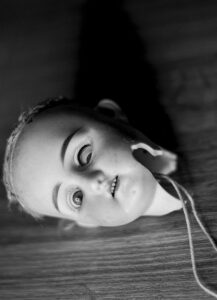
The Psychology of Hauntings: Why We See What We Fear
Why We See Ghosts: Musician, Therapist, and Paranormal Expert Howard Gorr Weighs In
Howard Gorr wears many hats—musician, therapist, and self-proclaimed ghost expert—but they all seem to converge when he explores one of humanity’s most enduring mysteries: why people believe they see ghosts. Drawing from decades of experience straddling the line between the emotional, the psychological, and the supernatural, Gorr offers a rare perspective on the phenomenon of ghost sightings. In this article, he answers some prime interview questions all about how trauma, memory, and even sound itself can blur the line between perception and reality—and why, for some, the unexplained feels very real.
What psychological mechanisms are at play when people believe they’ve experienced a haunting or seen a ghost?
“Seeing is a psychological phenomenon. The observer has an effect in any situation We see what we fear whether unconscious or conscious focus in many cases. Like attracts like. So, if we’re in a fearful state we will attract fearful situations.
How many psychological mechanisms are threatened when we see something that is not normally based in reality, or what society calls refers as reality. Our whole life paradigm has to be shifted to accommodate this anomaly.”
How does fear shape our perception in dark environments, such as old houses or graveyards?
“Projection makes perception. As all houses are neutral. It’s what we’ve assigned to them; we assign darkness or comfort or neutrality. But we look out onto the world with pre-expectations. Many people are comforted while in cemeteries while others are in a state of fear. Again, we look inside subconsciously at a level unaware to us in many cases and reassign a trait, emotional trait on what we see.”
Are there common personality traits or mental states that make someone more likely to report paranormal encounters?
“Open minded people I believe have more abilities to see the world as it may really be. For those who are locked into a science which is really a religion. As science is a consensus and not a fact. Science is not the end-all, especially when you figure or determine who’s making the judgment on science, the final judgment on science is the human mind which is a psychical apparatus. And there is no science for the human mind. It cannot be measured, it cannot be validated, only physical reactions from the body can be measured but not thoughts.”
Can you explain how cultural background and personal beliefs influence what we perceive as ‘haunted’ or supernatural?
“We all are to some degree a product of our environment, however there are those who see beyond that or see other ways of viewing the same within cultures. Cultures are like religion in many ways, practices that have embedded in tradition. When it all is said and done, projection Makes perception. This can be further explored in the spiritual paths such as a course in miracles material. Non-religious, yet a spiritual path.”
Why do many people report seeing similar ghostly figures—like shadow people or Victorian-era apparitions—despite having no prior exposure to these ideas?
“Some paranormal explorers into the supernatural and ghost sightings often have the thought that many of these beings have passed away or are still projecting their own body out into the world. In particular after lightning storms as we are energy and need electricity in various forms to project our physical body. So those who have passed away at a particular time or still projecting what they projected while they were alive.”
What does our fear of the supernatural reveal about deeper psychological or existential concerns, such as fear of death or the unknown?
“Time placement apparitions can sometimes be related to past reincarnation experiences. Some are connected to their prior existence on this earth plane. Just as many have an affinity towards certain cultures, time frames, medieval times, Egyptian times, etc. can sometimes be attributed to a past life experience.
Death is largely known as the end of the personality, of the spirit. Especially if a one is atheistic and belief. Death has a negative connotation to it which most cultures give that connotation to such. Others within cultures and outside cultures view death as a transition, and nothing to be afraid of. As energy does not die it only transfers. Most people I’ve interviewed who are atheist and very fearful of death. While in some cases many who are spiritual are not as concerned about death. They may not want to leave or be ready to leave the earth plane but understand there is a larger picture at play.”
Anything to add here?
“And lastly fear is an emotion that’s counterproductive to the life force. It dampers life force, which it can never do eternally by the temporarily blurring our vision of who we really are as very powerful spiritual beings.”
What topics would you like to read next by authorship of paranormal expert Howard Gorr in the upcoming edition of his column? Leave your comments below!