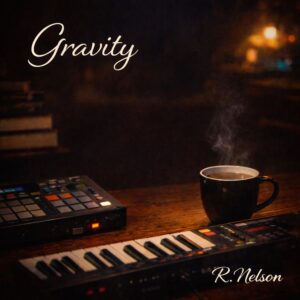
Gravity by R. Nelson (Interview 2026)
Edition Thirty-Six – Week Thirty-Six; Unit 2:
Written by: Mercedes Barreto
Introduction
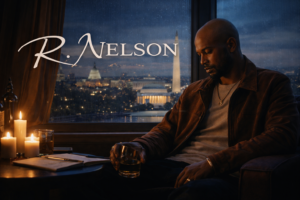
Independent artistry thrives on authenticity, and R. Nelson brings exactly that to the table. With a creative approach that feels both personal and experimental, the artist uses music and visual storytelling to build an atmosphere that resonates beyond trends. The work carries an underground edge while remaining emotionally accessible, offering audiences a space where reflection, rhythm, and individuality intersect. As digital platforms continue reshaping modern artistry, R. Nelson represents a growing wave of creators who are building genuine connections through consistency, vision, and self-expression.
Short Review
R. Nelson’s work stands out for its raw sincerity and creative independence. Rather than chasing polished commercial formulas, the artist leans into mood, texture, and emotional presence, creating content that feels immersive and honest. There’s a clear sense of artistic identity throughout the music and visuals, balancing introspection and experimentation in a way that keeps audiences engaged. Whether through sound, storytelling, or atmosphere, R. Nelson demonstrates the kind of creative freedom that makes independent artistry exciting to watch evolve.
Q&A
How would you describe your artistic identity in your own words?
“My artistic identity lives somewhere between late-night honesty and cinematic restraint. I make modern soulful Grown-Folk R&B that feels lived in, not manufactured. The songs usually sound calm on the surface, but underneath there’s tension, longing, memory, regret, attraction, distance, hope… all the things adults carry quietly while still showing up to work, answering texts, driving home at night, or pretending they’re fine.
As R. Nelson, I’m drawn to atmosphere and emotional realism more than performance theatrics. I like records that breathe. Records where silence matters just as much as the lyrics. There’s weight in the quiet. Power in the pause. My pen game is wicked, but I’d rather pull somebody into a feeling than overwhelm them with noise. A lot of my music explores emotional gravity: the push and pull between vulnerability and self-protection, love and restraint, connection and distance. Songs like Gravity, Do I Deserve Love, and my upcoming record Unable to Love aren’t just relationship songs. They’re studies of emotional survival. At the same time, my creative world is bigger than one sound. Through Nelson Creative Group and identities like Geese Da Goon, I also tap into DC culture, roller skating energy, satire, confrontation, and social commentary. So the artistry has range: soulful and reflective on one side, rebellious and disruptive on the other. Like a velvet suit hanging next to steel-toe boots. 🎙️🥃🛼
At the core, though, everything I create is about authenticity. I’m not chasing trends. I’m documenting emotional realities and cultural spaces the way I actually experience them.”
What originally inspired you to begin creating and sharing your work online?
“This actually isn’t my first go-round creatively. I originally started creating and releasing music under Geese Da Goon, which I still release music under today. A lot of that music was rooted in roller-skating culture and the rink scene because I’m an avid skater myself. At the same time, dealing with rink politics and gatekeeping pushed me creatively even harder. Eventually, I realized there was more inside me artistically than just one scene or one sound.
That’s where R. Nelson came in, which is also my real name. I wanted to create music that could reach beyond the rinks while still remaining authentic to who I am creatively. I realized there were more stories to tell, more emotions to explore, and more people out there who might connect with what I create.”
Which artists, genres, or life experiences have influenced your style the most?
“Being from Washington, DC, Go-Go music is naturally part of my DNA, but DC is also home to artists like Johnny Gill, Stacy Lattisaw, and the late great Marvin Gaye. At the same time, my influences go far beyond DC alone. I grew up listening to Earth, Wind & Fire, Parliament-Funkadelic, Motown, America, Elton John, The Beatles, and so many others. There are honestly too many influences to fully name. Out of all of them, though, I’d probably say Rufus and Chaka Khan had one of the biggest impacts on me creatively. Chaka Khan is actually my favorite singer, and writing a song for her one day would honestly be a dream.
Beyond music itself, life experiences have probably influenced my style just as much as the artists I grew up listening to. A lot of my songwriting comes directly from observation, emotion, relationships, internal conflict, and everyday moments people quietly carry with them.”
What message or feeling do you hope audiences take away from your content?
“More than anything, I hope people can relate to the music and genuinely feel something from it. I’m still surprised and grateful that people are connecting with these songs at all, so I appreciate every listener who takes the time to sit with the music. A lot of the records come from real-life experiences, both good and bad. I want listeners to feel the emotion and the moment behind each song. Whether it’s the tension of having feelings for someone you can’t fully express because of the situation surrounding it (Gravity), questioning whether you’re even worthy of love (Do I Deserve Love), looking forward to a good night and simply vibing out (Let It Drop), or staying deeply in love with someone no matter how long you’ve been together (Why Are You So Beautiful), I want the music to feel emotionally honest. If somebody hears one of my songs and feels understood for a few minutes, then I’ve done my job.”
How has your creative process evolved since you first started uploading?
“My creative process has evolved naturally over time, partly because of technology and partly because of how I approach songwriting now. I work inside a DAW with a lot of VSTs and production tools, but most songs still start from something simple. Sometimes it’s me tapping a drum pattern on a table, humming an idea, or building an atmosphere first before anything else. Honestly, the table might be the cheapest and best instrument ever invented. 😂
I also openly use AI-assisted vocals as part of the creative process because I look at AI as a tool, not the answer. I know what my strengths are creatively, and singing isn’t necessarily one of them. The songwriting, production direction, emotional tone, arrangement, and overall vision still come from me. After that, everything goes back into the DAW for editing, mixing, layering, and mastering until the record feels right emotionally. I also have what I jokingly call a pseudo A&R team made up of six coworkers and one skater who hear records early and give me brutally honest feedback. They’ll tell me what works, what doesn’t, and whether a song actually connects emotionally or not. That honesty has helped shape my creative process in a major way.”
Where can we hear more of your music, and why should we? What makes you an iconic artist for the times?
“You can hear my music on Spotify, Apple Music, YouTube, Amazon Music, and Bandcamp.
And yes, I highly recommend Apple Music… especially since I own Apple stock. 😂
What makes me an artist for the times is probably the balance between emotional honesty and creative independence. We’re living in an era where artists no longer have to wait for permission to build audiences or create meaningful work. I’m blending traditional songwriting, modern technology, visual storytelling, independent creativity, and real-life emotional experiences into something that feels human and relatable. I think a lot of people are searching for authenticity right now, and that’s what I try to bring into every record. I’m not trying to manufacture moments. I’m trying to create music people can actually live with.”
Anything to add here?
“I think we’re entering an era where independent artists can build real worlds instead of just releasing songs. For me, the music is only one piece of a much larger creative universe involving storytelling, visuals, culture, radio concepts, skating, satire, and emotional realism. Different sides of my artistry may express those ideas differently, but they all come from the same creative core. I’m just focused on building something honest that people can live with for a long time.”