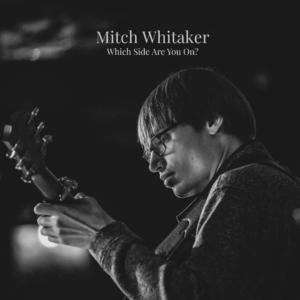
Which Side Are You On? by Mitch Whitaker (Interview 2026)
Edition Forty-Three – Week Forty-Three; Unit 2:
Written by: Mercedes Barreto
Introduction
There’s a quiet intensity to the music of Mitch Whitaker — the kind that doesn’t demand attention loudly, but earns it through honesty, craftsmanship, and conviction. Rooted in alt-folk traditions yet sharpened by classical guitar training, Whitaker’s songwriting explores identity, politics, love, and modern disillusionment with poetic precision. Based in Portland, Oregon, the emerging songwriter has steadily built a reputation for deeply human storytelling and emotionally charged performances. With releases like Which Side Are You On?, Whitaker delivers songs that feel both personal and socially urgent, proving that folk music still has the power to challenge, comfort, and connect.
Short Review
Mitch Whitaker crafts a collection of songs that feel intimate yet politically aware, balancing vulnerability with sharp observation. His classical-influenced guitar work gives the record an elegant backbone, while his lyrics cut directly into the anxieties of contemporary life. Not to mention his ability to merge melody with meaning, creating folk music that feels reflective without losing urgency. Whitaker’s strength lies in restraint — every lyric, chord, and pause serves the emotional weight of the song. The result is an album that lingers long after the final note.
Q&A
Your music balances deeply personal storytelling with broader social themes. How do you decide where those two worlds intersect in a song?
“Well, that’s life, isn’t it? The personal tangled up in the political. I don’t think it’s possible to separate the two and be an honest storyteller. I make sure to dignify the characters in my songs by not shying away from the seriousness of their predicament. You have a background in classical guitar training.”
How has that shaped your songwriting and performance style within folk music?
“It certainly shaped the way I play the guitar. Everything I play is with my fingers, no pick, which in the world of folk music works quite well. I learned a great deal of technique and musical theory during that time, and I’m very grateful to have had those years to focus on guitar and classical music. But I find myself increasingly moving beyond those techniques and developing a style that fits within the folk genre.”
Folk music has historically been tied to protest and social commentary. What role do you believe folk artists should play today?
“We ask a lot of artists already, especially independent ones. I don’t think folk artists need to do much more than what they’re already doing. Just keep writing good songs. I’m heartened to see so many songwriters speaking out about the injustices taking place across the country. I’d like to see streaming services do more to promote those songs, as well as traditional folk artists whose work might otherwise be overlooked.”
What’s your creative process usually like — do songs begin with lyrics, melody, or guitar arrangements first?
“It depends on the song. Dark Days of Freedom started with the lyric first. Same for Panacea and others. For Which Side Are You On?, I rewrote the verses to the Florence Reece labor union song. I needed to get my feelings out about the killing of Alex Pretti and Renee Good, and I thought Which Side? was the best way to do that. With songs that start with the music first, I usually reference the voice notes folder on my phone. I have hundreds of musical fragments I’ve written over the years. I’ll often go through and listen in the hopes of finding something that resonates with what I want to write about.”
Where can we find more of your music, and why should we?
“Any of the streaming services. I’m fairly active on TikTok. When I write a new song, that’s the first place I post it. I don’t write the songs for myself. I write them for the audience, and I think that comes through in the music.”