Bali Breeze by Map of the Woulds (Interview 2026)
Edition Sixty-Eight – Week Sixty-Eight; Unit 2:
Written by: Mercedes Barreto
 Introduction
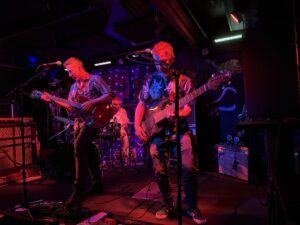
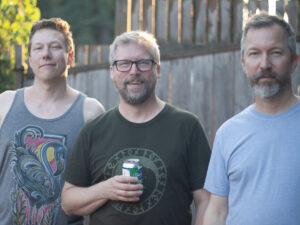
Some bands are content to follow familiar formulas, but Map of the Woulds has built its identity on taking the unexpected route. Emerging from Seattle’s vibrant independent music scene, the trio fuses angular rock, dark jazz, psychedelic textures, progressive experimentation, and an unmistakable sense of humor into a sound that’s both adventurous and remarkably engaging. Their own description—”17-chord pop”—offers a playful glimpse into a band that refuses to be boxed into a single genre while still crafting songs that connect emotionally and musically.
With recent releases such as Goldilocks Zone, The Old Songs, and the acclaimed II EP, Map of the Woulds continues to earn praise for its originality, inventive songwriting, and fearless approach to modern rock. Ahead of our interview, we caught up with the band to discuss their creative process, musical influences, the stories behind their latest music, and what lies ahead on their ever-evolving artistic journey.
Short Review
Map of the Woulds is the kind of band that rewards curious listeners. Every song feels like an exploration, blending progressive rock, indie, jazz, funk, and psychedelic elements into compositions that remain surprisingly accessible. Rather than relying on convention, the trio embraces unexpected turns, intricate arrangements, and thoughtful lyricism without sacrificing groove or melody.
What makes the band especially compelling is its balance of technical musicianship and personality. The music is imaginative without becoming self-indulgent, playful without losing emotional depth, and experimental while remaining inviting. In an era where originality is increasingly rare, Map of the Woulds stands out by creating music that is genuinely distinctive, refreshingly unpredictable, and unmistakably their own.
Q&A
For readers discovering Map of the Woulds for the first time, how would you describe your sound beyond the phrase “angular rock, dark jazz and goofball funk”?
“Adrian: I’ve been calling us genre-less “rock” music. We really have an “anything goes” mentality when it comes to writing songs.
Andrew: We write in a trio format. Something about arranging compositions entirely with just 3 instruments seems to give the sound a certain focus or punch that shines through – even when it gets extended with overdubs in the studio or guest musicians on the stage. All three of us write vocals and sing, so that brings a larger range of melodic and lyrical flavors and also harmonies that are fundamental to the song.
Woody: Quirky pseudo-pop for fans of jam bands.”
Your music blends several genres in unexpected ways. How did that unique musical identity develop?
“Woody: I think the three of us are interested in weird, psychedelic, avant garde music as well as some radio-friendly pop music, and our songwriting reflects that. I personally want to make approachable music with weird and curious twists.
Adrian: When I think of my major influences, it’s all over the map from Prince to Tortoise to Grails to Fugazi. Jeff Buckley, classic prog and psychedelic music like Rush, Yes and Pink Floyd, Phish, D’Angelo, The Mommyheads, Critter’s Buggin’, Bill Frisell, etc. I try to create music that I want to listen to, so all of those influences go in the mix.
Andrew: The first rock bands that I fell in love with were largely “prog” or prog-adjacent: “Queen, Rush, Yes, Pink Floyd”. It was an era where lots of bands were blending genres and influences to a historically unusual degree. It was inspiring, even if sometimes a little overly dramatic or serious, in retrospect. So I guess that was just part of the ideal from an early age. But then, as we grew up, and just continued to appreciate inspired music of all genres, in a way we never took our bands seriously enough to specialize. Maybe our attitude was something like “we’re just doing this for ourselves and whoever ends up liking what we want to play, so why would we bother to limit its scope so it would fit in a marketable box of some kind”. So we continue to throw in whatever excites us, but it’s probably a little more relaxed and organic every year.”
As a trio, how do each of your individual musical backgrounds influence the band’s creative direction?
“Adrian: I’m entirely self-taught and have tourette syndrome, so while I always strive to keep the groove solid, I also tend to accent things in a shifty manner. I have a really hard time just sitting and playing a backbeat for a whole song, so there’s going to be some really unexpected rhythmic moments coming from the drums. I also have a huge background in improvised music, so I think there are really only one or two songs where I’ve actually written a drum part. Mostly I just listen to the song and play along.
Andrew: So true! Yeah, ditto for me on most of that. Also, for decades, I’ve been pretty conscious of trying to compose lines and structures that are new, that I haven’t heard before. So there’s still a bit of that in play. Only very recently, that seems to be relaxing a bit into allowing what I’m hearing in my head to come out more directly. There’s more than enough originality in the initial structure that Woody brought in that became “Bali Breeze”, that I can just relax and respond to what I’m hearing.
Woody: There was always music in my home growing up; my parents play guitar and my mom harmonizes; but I was mostly self-taught and never formally studied. And when I was about 17, I met Andrew playing psychedelic improv at an old Seattle cafe, the Chai House. I got immersed into that scene soon after, and benefitted greatly from jamming with more experienced musicians. I’ve played guitar in many groups, but the trio format brings new opportunities, and requires a different sound to fill the space. So I try to draw on what I know and love to do that.”
Many of your songs feature unusual structures and rhythms while remaining surprisingly accessible. How do you strike that balance?
“Andrew: It’s really nice to get questions like this! It’s something that we of course think about and probably is a big part of why we sound like we do and a piece of what people get excited about in our music, but seldom gets asked about. Sometimes, we push an odd/epic idea into a song and build around it, but more frequently I think those non-traditional rhythms and structures come from just letting the phrases end or wrap around when it feels like they want to, instead of when we’ve come to the end of an even 4 bars. Woody could maybe chime in here, but I feel like that was the case with Bali Breeze. He just played what felt right and figured out how many beats were in each “measure” after the fact. But as for why they’re accessible: over time, our influences tended to move from the initial interest in progressive rock to things like polymetric-funk and groove-heavy jazz. Ideally, it goes beyond delighting the mind with complicated rhythms and develops into something that moves your body around in a way that the mind eventually gives up trying to understand.
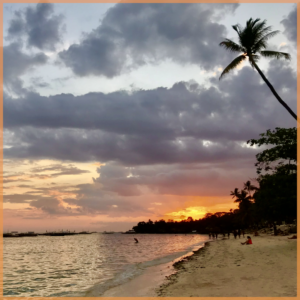
Woody: In certain songs I write, the unusual structure or rhythm feels natural, and I try not to overthink it. In this tune, Bali Breeze, I like the way the first measure jumps into the next, but the following measure seems to ruminate. It fit the island vibe to me, like a gentle tug in an undetermined direction. I don’t mind writing songs in 4/4 with standard progressions, but oftentimes the mood or the story of the song I’m writing is asking for something different.”
Where can we hear more, and why should we?
“Adrian: We’re on Bandcamp and Youtube and all of the streaming platforms.Our instagram is @mapofthewoulds and we’ve got 7 new recordings that we’re wrapping up that we’ll release soon and might package up as physical media at some point. As for why, if you like music that is unexpected in some way, or doesn’t really fit into any category, then you should check us out.