Nyx? by Pocket Lint (Interview 2026)
Edition Ninety-Six – Week Ninety-Six; Unit 2:
Written by: Mercedes Barreto
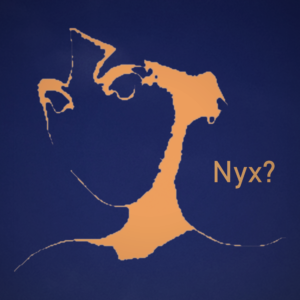
Pocket Lint — Artist Introduction
There are artists who write songs, and then there are artists who build worlds. Pocket Lint belongs firmly in the second category. Based in London, the solo project of M. Heffernan moves freely between indie pop, electronic music, progressive pop, alternative sounds, synth-pop, and experimental textures, resisting the boundaries of any single genre. The artist describes Pocket Lint as a “genre nomad” creating concept-driven noir pop, with guitars, synths, pianos, and found sounds all becoming part of the musical palette.
What makes Pocket Lint particularly intriguing is the project’s fascination with ideas beyond music itself. Songs can begin with an artwork, an historical object, a literary figure, a strange artifact, or an obscure story, transforming those inspirations into musical experiences. Rather than simply describing an idea, Pocket Lint seems interested in creating an atmosphere around it—inviting listeners to step inside a particular moment, image, or imagined space.
That approach is especially evident throughout the 2026 album Wunderkammer. The title itself evokes the traditional “cabinet of curiosities,” and the album explores a collection of unusual objects and stories, including an antique cameo, a cyanometer, notebooks documenting butterflies, and an encounter with an “ancient traveller.” Each subject becomes a doorway into another musical world.
Pocket Lint’s catalog demonstrates that this fascination with concept and storytelling is not new. Earlier projects include Gallery, an album described as an attempt to create an “aural gallery,” with songs inspired by or representing works of art, and C.3.3., a musical journey through the life of Oscar Wilde. Across the catalog, music, visual art, literature, history, and imagination repeatedly intersect.
The result is a body of work that feels less like a conventional collection of songs and more like an ongoing exhibition—one where every track has the potential to reveal another curious object, character, memory, or story.
Short Review — Wunderkammer
Wunderkammer is an intriguing example of what happens when songwriting begins with curiosity. Rather than building an album around one straightforward genre or theme, Pocket Lint approaches the record like a cabinet of musical curiosities, allowing unusual subjects to dictate the atmosphere and direction of individual pieces.
The album’s tracks are connected by a fascination with objects and stories that seem to contain lives of their own. “Amethyst Cameo,” for example, transforms an antique object and its mysterious history into a shimmering, dreamlike song, while “Cyanometer” takes an unusual scientific instrument—the device historically associated with measuring the blueness of the sky—and turns it into an imaginative meditation on color, emotion, and perception.
There is also something wonderfully cinematic about Pocket Lint’s approach. Synthesizers, keyboards, guitars, rhythm, vocals, and found sounds work together to create environments rather than simply accompanying lyrics. The music can feel nostalgic without being trapped in nostalgia, drawing on recognizable electronic and pop traditions while maintaining an experimental edge.
Perhaps the most compelling quality of Wunderkammer is its willingness to make the unfamiliar interesting. Pocket Lint takes subjects that might ordinarily belong in a museum, archive, notebook, or forgotten corner of history and gives them a musical life.
It is an album for curious listeners—people who enjoy following a song down an unexpected path and discovering where it leads.
Interview with Pocket Lint
For readers discovering Pocket Lint for the first time, how would you describe the project and the world you’ve created around it?
“I think of it as an entire art project, but the canvas is music and the creation of music, so the packaging, presentation and music is just the end result of the whole process. I try to make sure that each release is its own entity and little world. And I try to make sure that I keep pushing myself, be that with different methods, processes, equipment. I may end up in a similar place, but the road was different and that for me is important.”
Where did the name Pocket Lint come from, and what does it represent to you?
“I chose the name as at the end of my band Remodel, I was left with some songs, some ideas and no outlet for them. Slowly I started to think about doing music, but didn’t really have an ambition beyond just trying to see those songs to a fruition. So these songs were literally the fluff left over. So EP 1 and EP2 contain songs from earlier, but done as a solo artist. They contained new songs too though, and it was those new songs that interested me more. So Pocket Lint moved from being about finishing off ideas and became its own thing. A thing where I did not have to negotiate or attempt to fulfill anyone else’s idea of what sort of music I should be making.”
You describe yourself as a “genre nomad.” What does being a genre nomad mean to you creatively?
“Freedom really. I can make whatever music I want, take inspiration from whatever and wherever. I am really drawn to music genres when they haven’t taken on fixed forms and been codified. So mid 60s rock, is far more musically diverse than rock becomes. Punk, does the same thing, bringing in its slipstream post punk and experimentation and the synth work of the late 70s / early 80s. They all allowed a certain freedom, and that is I think what I mean by the term. You can have some bossa nova and mix it with French touch style synths. Why not?”
Was there a particular moment when you realized that conventional genre boundaries weren’t going to define your music?
“I think just the realisation that I wasn’t beholden to anyone else. I get to be the arbiter of my own work. At the moment, I am working on an album which started as an attempt to explore shoegaze guitars and parallel processing with Adrian Sherwood style dub. Using that as a starting point and allowing the freedom to see where it is going to go.”
Where can we hear more, and why should we?
“Well, all of the main streaming places. I am also on Bandcamp, where you can see the lovely products I mentioned earlier. If you read this and order something, I will throw in a goodie for you. Just mention the blog when you order.
https://pocketlint17.bandcamp.com/
Why should you is a far more interesting question. So let me make a case for what I do. If you are interested in the arcane, the small details, the darker corners and the big ideas, If you find yourself listening to a mix of music and like different influences. If you want music that isn’t just made to be sold, but is crafted as an extension of the artist, then maybe you would enjoy my stuff.”
Anything to add here?
“Huge thank you for the great questions and take care of yourselves.”