IRISH ACTOR & FILMMAKER Christopher Torretto (Interview 2026)
Edition Five – Week Five; Unit 3:
Written by: Mercedes Barreto

What first inspired you to pursue a career in acting, and when did you realise that performing and filmmaking were more than just a passion?
“I think to understand why I became an actor, you first have to understand the life I came from.
I grew up in Northern Ireland, the youngest of six children, in a home surrounded by poverty, abuse and hardship. My childhood was anything but easy. We lived in a society where religious division and sectarianism were deeply embedded in everyday life. I remember being bullied because of religion, being frightened walking to school, and witnessing grown men throwing bricks at school buses filled with children simply because they came from the other side of the religious divide.
And unfortunately, going home wasn’t necessarily any safer. I grew up in an extremely difficult and abusive environment. As a child, you don’t always understand why the world around you is the way it is. You just know that you’re frightened, that you’re struggling, and that somewhere deep inside you, you’re desperately hoping there’s something better waiting for you. For me, that something was film. I remember being a tiny kid watching Sylvester Stallone in Rocky. I was absolutely mesmerised. I went upstairs to the bedroom I shared with my siblings, tied a shoelace between the bunk beds, and started ducking underneath it, throwing uppercuts and moving around like Rocky Balboa.
I watched Bloodsport and Universal Soldier so many times that I practically wore the videotapes out. But it wasn’t just the fighting, the action or the excitement that fascinated me.
It was the escape. When you’re a child surrounded by violence, poverty and fear, and suddenly you’re watching these incredible worlds unfold on a television screen, something extraordinary happens. For a couple of hours, you’re somewhere else. You’re not the frightened little boy anymore. You’re not living in that house. You’re not surrounded by the circumstances you’ve been born into.
You can be absolutely anyone, anywhere in the world. I didn’t understand what actors, directors, producers or cinematographers actually did. I didn’t understand the incredible work that went into making those films. All I knew was that somebody, somewhere, had created a world I desperately wanted to be part of. As I got older, I became fascinated by American films. I’d watch stories set in California or American high schools, and I’d imagine myself living those lives. It looked like another universe compared with the world I knew.
And I wanted to find that universe. Things became even more difficult during my teenage years. I ran away from home and experienced homelessness. There were nights when I was just 14 or 15 years old, lying on a freezing bench, not knowing where I was going to sleep or when I was going to eat next, while still trying to attend school and somehow live a normal teenage life. I’ll never forget that during those years, I carried three pictures with me. One was David Beckham playing for Manchester United. One was Dwayne “The Rock” Johnson during his WWE career. And the other was a magazine picture of Sylvester Stallone as Rocky Balboa. Those pictures meant everything to me.
I’d look at those men and think, One day, I’m going to make something of my life. One day, I’m going to get out of this. They represented something bigger than fame or success. They represented possibility. I wanted to believe that where you were born didn’t have to determine where you ended up. As life went on, I experienced more hardships, including a head injury, homelessness and the loss of almost everything I had on more than one occasion.
But that dream never disappeared. Years later, after the birth of my daughter, I experienced a particularly difficult period with depression, anxiety and agoraphobia. I became so frightened and overwhelmed that I struggled even to leave my house.
During that time, films once again became my sanctuary. I watched The Lord of the Rings and The Hobbit almost every day. I became fascinated by performances from actors like Tom Hardy and Daniel Day-Lewis. I started studying them, watching their expressions, their movements, the way they delivered dialogue and how they could communicate so much without saying a word.
I wasn’t just watching films anymore. I was studying them. Eventually, I found an acting class. But getting there was one of the most terrifying things I’d ever attempted. It took me months. First, I had to find the courage to leave the house. Then I had to make it to the car. Then I had to manage the anxiety that made me physically sick. Then I had to drive to the end of the street without panicking.
Every little step felt like climbing a mountain. When I finally made it to an acting class, the anxiety was so overwhelming that I walked out. But I kept trying. I was so frightened of performing in front of people that my acting coach eventually helped me find a way to begin, even allowing me to prepare behind a curtain. At that point, I didn’t even know what a monologue was. But I knew a scene from In the Name of the Father, starring Daniel Day-Lewis. It was a prison scene involving Gerry Conlon and his father, Giuseppe. I’d watched it so many times that I practically knew it by heart. So I performed it and when I finished, I received a standing ovation.
Acting wasn’t simply a passion. It was something that had kept me alive emotionally through some of the darkest years of my childhood, and now it was giving me a purpose.”
You’ve reportedly completed 29 film projects within just 20 months. Looking back, what motivated you to work at such an incredible pace, and what did that period teach you about yourself as an actor?
“I’ve always believed that if you’re going to do something, you should give it absolutely everything you’ve got. Growing up, I was hugely inspired by people like Dwayne Johnson, Sylvester Stallone, Tom Hardy, Simon Pegg and Johnny Depp. The list is genuinely endless.
I remember Dwayne Johnson’s attitude towards hard work and his famous words about blood, sweat and respect: the first two you give, and the last one you earn. That mentality really connected with me because when I started acting, I had absolutely nothing. No industry connections. No wealthy family. No prestigious drama-school background. No professional credits. I was a working-class lad from Northern Ireland who had grown up in extreme poverty, experienced homelessness and overcome circumstances that could quite easily have destroyed my future. But I had something that nobody could take away from me. Determination.
When I first contacted Spotlight, the professional casting platform, I was told I needed to build up professional experience and screen credits to qualify. I remember being told that reaching that stage could take actors four or five years. And I thought, Right. Four or five years? Let’s see what I can do. It wasn’t arrogance. It was hunger. I had children of my own by then, and one of the biggest motivations in my life was ensuring they would never have to experience the childhood I’d endured.
I wanted to build something. I wanted to give them opportunities, security and a future that I had never been given. So I got my first headshots and started contacting filmmakers. I used Facebook, Instagram, student filmmaking groups and absolutely every avenue I could find.
I wasn’t waiting for somebody to discover me. I was going out looking for opportunities. My first jobs were student films, and something unexpected happened. After completing one project, other students began hearing about my performances and wanted to work with me. Before I knew it, I was involved in seven or eight projects at the same university.
I remember one senior tutor telling me I was one of the best actors he’d seen in years, and he was particularly impressed by how much time and effort I was giving to helping the students make their films. That meant a tremendous amount to me. Those early projects gave me the material to build my first showreel, which opened the door to feature films. I landed my first leading role, and while filming it, I secured my second and third. At one point, I completed three feature films, playing three completely different characters, on three different sets, within just 16 days.
It was extraordinary. And I absolutely loved it. I remember a particularly special story involving my first feature-film casting. The director was looking for someone to play a police officer. When he first saw my headshot, he immediately dismissed me because I had a shaved head and tattoos. He simply couldn’t picture me in the role. Apparently, his wife kept mentioning my photograph and telling him there was something about me that stood out. She told him she could see something in my eyes. One evening, after struggling to cast the role, he finally decided to watch my showreel. The opening scene was a completely improvised speech. He later told me that within about 15 seconds, he knew I was the actor he wanted. He offered me the role that night, and I discovered the email the following morning. I’ll never forget that.
Somebody had looked at my appearance and decided I wasn’t right for a character before they’d seen me perform. But the moment they watched my work, their entire perception changed. That taught me an important lesson about this industry. Talent doesn’t always arrive in the packaging people expect. From there, things moved incredibly quickly. I was constantly working, auditioning, submitting self-tapes and approaching filmmakers. Even when I was sitting on a film set between takes, I’d be looking for the next opportunity.
I didn’t want to waste a single minute. And I never treated student films as less important than professional productions. If a student director was struggling because a scene was taking longer than expected, I’d reassure them. I’d say, “Don’t worry. If making films was easy, everybody would be doing it. We’re actors. This is what we’re here for. We’ll get it right.”
If I needed to be on set from five in the morning until five the following morning, I was prepared to do it. I wanted to be the first person there and the last person to leave. People regularly commented on my work ethic, my energy and the rawness of my performances. I was told that I had an ability to step into characters and make them feel completely believable. I think a lot of that came from my own life experiences. I’d experienced fear, loneliness, survival, desperation, hope, love and loss in ways that had deeply shaped me. I didn’t have to imagine every emotion from nothing. I could draw on experiences I’d already lived through. But the most important thing those 20 months taught me was that your background doesn’t have to limit your future.
I completed 29 film projects in 20 months because I was determined to make every opportunity count. And I discovered something about acting that still fascinates me today. Acting gives you the opportunity to live a hundred lifetimes in one. For somebody who grew up dreaming of another life, that is an extraordinary gift.”
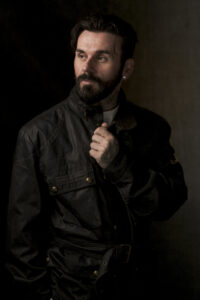
From acting in film, you’ve expanded your creative work into screenwriting and directing. What inspired you to step behind the camera, and how has becoming a filmmaker changed the way you approach acting?
“There were several defining moments that pushed me towards becoming a filmmaker, but one of the biggest happened when I travelled to Los Angeles. I’d been offered what was presented to me as a recurring role in a television series supposedly connected with Netflix.
For somebody who had grown up dreaming about America, it felt like everything I’d ever wanted was finally happening. I worked incredibly hard to meet the requirements for my American visa. I remember thinking that if somebody asked me to demonstrate seven things, I’d do everything I could to demonstrate 30. I wanted to prove that I belonged there.
Eventually, I secured my visa, travelled to Los Angeles and thought I was beginning an incredible new chapter in my career. Unfortunately, it became one of the most devastating experiences of my life. After spending time in America, I began discovering that the project wasn’t what it had been represented to be. One minute I was being told Netflix was involved. Then it was Amazon. Then another company. The story kept changing. I’d handed over thousands of pounds to the individual behind the supposed opportunity, including money connected to claims about SAG-AFTRA rates and arrangements I didn’t properly understand at the time.
I was relatively inexperienced, and I’d trusted someone who appeared to have the power to make my biggest dream come true. When I began questioning what was happening and stood up for myself, the situation deteriorated terribly. My then-wife, our two children and I ended up without accommodation, having to survive in a car in Los Angeles. It was heartbreaking. Imagine spending your entire childhood dreaming of a place, finally getting there, and then finding yourself in a situation where you’re struggling just to survive. I’d already experienced homelessness as a teenager, and suddenly I was facing something similar again, only this time I had a family depending on me.
I had a choice. I could let the experience destroy my dream, or I could find another way forward. So I started making connections with legitimate filmmakers, directors and producers. I began exploring how productions actually worked, and I started thinking about creating opportunities rather than relying entirely on other people to give them to me. Eventually, I returned to Britain with the intention of regrouping, rebuilding my career and one day returning to America under very different circumstances. But life had other plans. When I returned, I began receiving some exciting acting opportunities. However, my then-wife expressed concerns about the attention that could come with a more prominent acting career.
I loved my family, and at the time I made the decision to put my relationship and family life ahead of my professional ambitions. So I stepped away from acting. Then something happened that changed absolutely everything. My little girl became critically ill. Over the course of a year, there were nine occasions when we came terrifyingly close to losing her. She spent time in a coma. I cannot adequately describe what that does to a parent.
I’d experienced abuse, homelessness, violence and so many difficult things throughout my life, but nothing compared with the fear of losing my daughter. When she eventually came home, I became so frightened that I would sit outside her bedroom at night, unable to sleep, listening and checking that she was still breathing. During that time, I started telling her stories. I’d invent characters, create silly voices and make up little adventures to entertain her. And one day, she encouraged me to start writing stories. That planted a seed. I’d stepped away from acting, but perhaps there was another way I could remain part of the world I loved. I spoke to my then-wife about screenwriting. It would allow me to continue being creative while working behind the scenes. So I opened Final Draft and started writing.
I completed my first feature-length screenplay in approximately three days. I didn’t really understand how unusual that was at the time. I just had a story in my head, and once I started writing, it kept coming.
The script reached people with experience at major film and television companies, along with actors and other industry professionals. The response was incredibly encouraging. People started asking whether I could write scripts for them. I was producing feature-length screenplays of around 90 to 95 pages in less than 72 hours. I remember someone with connections to Lionsgate questioning whether I’d genuinely written one of those scripts in three days. They simply couldn’t believe it. So I wrote another screenplay in approximately 49 hours. When they still questioned how I could do that, I challenged them to give me a logline. They gave me a tiny premise of just a few words. Roughly three days later, I’d turned it into a complete screenplay.
I’ve since been told that some of my scripts have been read by well-known performers, including Robert De Niro, Pierce Brosnan, Samuel L. Jackson, Gianni Capaldi, Jonathan Schaech and Lewis Tan. Of course, being told that someone has read a screenplay doesn’t mean they’re attached to a project, but just knowing that my writing was potentially reaching people at that level was incredibly encouraging. And these scripts were written by me, sitting at my laptop, years before generative AI became part of everyday creative conversations.
People frequently asked how I could write so quickly, particularly when I was creating characters with experiences completely different from my own. My answer was always the same. I understand emotions. You don’t necessarily have to experience an identical situation to understand the human emotion at its centre. Someone once challenged me by asking how I could write convincingly about somebody isolated in outer space when I’d obviously never been there. And I said, “No, I’ve never been to space. But I’ve been alone. I’ve been homeless. I’ve known what it’s like to feel isolated, frightened and desperate to survive.” Those feelings are universal. The circumstances may change, but the emotions connect us. I think that’s what people responded to in my writing. There was always something real underneath the story. Eventually, I started asking myself another question. If I could act and I could write, what was stopping me from making films myself? But my motivation wasn’t simply to become a director or producer. It came from remembering how difficult it had been for me to break into the industry.
I thought about all the talented actors out there who never get an opportunity because they don’t have connections, money, representation or family members in the industry. I thought about young filmmakers leaving university, desperately trying to get their first professional experience. And I thought, What if I could help change that for somebody?
Quentin Tarantino has spoken about the importance of going out and making your own films rather than waiting for permission. That philosophy really connected with me. So I started learning more about cameras, lighting, sound, production and everything involved in bringing a story to life. I wanted to bring together talented actors and crew members, including people from underprivileged backgrounds, and give them opportunities to demonstrate what they were capable of. The more involved I became in developing films and helping other people, the further I found myself stepping away from my own acting career. But working behind the camera also changed the way I understood acting.
I began to appreciate the entire filmmaking process from a different perspective. As an actor, you’re concentrating on your character, your performance and the emotional truth of a scene. As a filmmaker, you start thinking about the bigger picture. How does that scene serve the story? What is the audience experiencing? How do the camera, sound, lighting and performances come together to create something meaningful?
It gave me enormous respect for every department on a production. It also made me a more thoughtful actor. I now understand how much responsibility an actor has, not just to deliver a convincing performance, but to contribute to the overall vision of the film. And perhaps most importantly, it made me realise that no matter how much I loved writing, directing or helping other actors, my own love of performing had never disappeared. Acting was my first love. And I don’t think that will ever change.”
Every filmmaker has a story. What kinds of stories resonate with you most, and what do you hope audiences take away from your work?
“I think the most important thing about storytelling is making people feel something real. Whenever I write a screenplay, there’s always a part of my own life somewhere inside it. It doesn’t matter whether I’m writing a heartbreaking drama, a psychological thriller, an action film or even a comedy.
Underneath the story, there has to be something human. There has to be something that connects with people. I’ve experienced some very dark moments in my life, but I’ve also experienced incredible love, hope, determination and the kindness of people who helped me when I needed it most. Those experiences influence everything I create.
I don’t want people to watch one of my films and simply say, “That was a good action film,” or “That was a funny comedy,” and then forget about it the following morning. I want them to take something away. I want a story to stay with them. I want them to think about the characters long after the credits have finished rolling. And if there’s one thing I want my work to communicate, it’s that no matter how difficult life becomes, there is always the possibility of something better. Not every story has to have a happy ending. Not every character has to be a hero. Sometimes the most powerful stories are the ones that make us confront uncomfortable truths. But I believe even the darkest stories can teach us something about humanity. Maybe it’s forgiveness. Maybe it’s courage. Maybe it’s understanding somebody whose life is completely different from our own. Or maybe it’s simply learning that we’re not alone.
I often think about the little boy I used to be, sitting in front of a television, escaping into the worlds created by other people. Those films gave me hope when I desperately needed it. And I’d love to think that one day, somewhere in the world, somebody might watch something I’ve created and experience that same feeling. Maybe they’re a child growing up in difficult circumstances. Maybe they’re lonely. Maybe they’re being bullied, struggling financially or simply trying to find their place in the world. If one of my films gives that person two hours where they can escape, dream and believe in a different future, then I’ve achieved something far more meaningful than any award or recognition. Ultimately, I want my stories to remind people that greatness doesn’t belong exclusively to people born into privilege. You can come from poverty. You can come from hardship. You can come from a place where nobody expects you to succeed. And you can still create something extraordinary.”
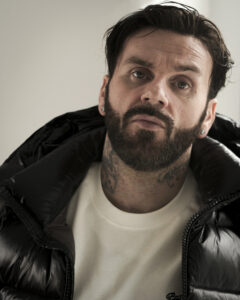
WHERE CAN WE LEARN MORE ABOUT YOU, AND WHY SHOULD WE?
“People can follow my journey on Instagram at @official_chris_t.
And why should they? Because I genuinely believe the most exciting chapter of my career is still ahead of me. In 2026, I made a decision that has changed the way I look at my future. I decided that I was going to return to acting and give it everything I have.
I stepped away from my acting career around 2019, and coming back after almost seven years is incredibly difficult. The industry has changed. People have moved forward. New faces have emerged, and I sometimes feel like I’m starting all over again. But I’m not the same person I was seven years ago. I’ve grown enormously. I’ve experienced things that have changed me as a father, a partner, a writer, a filmmaker and, most importantly, as a human being.
And I believe those experiences have given me an even greater depth and understanding of the characters I want to portray. I’m currently rebuilding my acting career, developing new film projects and exploring the possibility of producing a documentary about my own life. That documentary could offer people a much deeper understanding of who I am, where I’ve come from and why I have such an extraordinary passion for storytelling. I’m also determined to pursue exciting opportunities in British film and television.
I’d love to be involved in some of the incredible television dramas being produced in Britain, working alongside the talented actors and filmmakers I’ve admired for so long. And I’m hoping that 2027 will become a defining year for me. Perhaps the year when everything I’ve been working towards finally begins to come together.
But more than anything, I want people to follow the journey because I want them to see that starting again doesn’t mean you’ve failed. Sometimes life takes you in a completely different direction. Sometimes you have to put your dreams aside for people you love.
And sometimes you find yourself standing at the beginning again, wondering whether you’ve still got what it takes. I believe I do. And I’m determined to find out just how far I can go.”
IS THERE ANYTHING ELSE YOU’D LIKE TO ADD?
“Yes, actually. There’s something I’d love people to remember.
If you’re reading this and you’ve experienced hardship, loss, loneliness, depression, poverty or anything else that’s made you question your worth or your future, I want you to know something. I understand. I know what it’s like to lie awake at night wondering whether things will ever get better. I know what it’s like to feel that the world has moved forward without you. I know what it’s like to chase a dream for so long that you begin questioning whether you’re ever going to reach it. And I know what it’s like to be told, directly or indirectly, that because of where you come from, there are certain things you’ll never achieve.
But I’ve always loved a particular way of describing sadness. Rather than saying, “I am sad,” think of it as, “Sadness is upon me.” Because there’s an enormous difference. If rain is upon you, it doesn’t mean you’re going to be wet forever. Eventually, the rain stops. Eventually, the clouds move. And eventually, the sun finds its way through again. I think life is very much like that. Hardship doesn’t have to be permanent. Failure doesn’t have to define you. Your past doesn’t have to determine your future. And just because somebody else has achieved their dream doesn’t mean there’s no room left for yours.
There’s enough sunshine in this world for all of us. I genuinely believe that.
I was once a frightened little boy lying on a freezing bench, holding pictures of people I admired and dreaming about a life that seemed a million miles away. Today, I’ve acted in films, written screenplays, travelled to Hollywood, worked with incredibly talented people and had opportunities that little boy could never have imagined.
Have I achieved everything I want to achieve? Absolutely not. Not even close. But I’m still here. I’m still dreaming. I’m still fighting for the life I want to build. And I’m still determined to become the very best version of myself. So whatever your dream is, whether it’s becoming an actor, making a film, building a business, changing your circumstances or simply creating a better life for your family, please don’t give up on yourself.
You don’t have to come from money. You don’t have to know the right people. You don’t have to have the perfect beginning. But you do have to believe that your story is worth continuing. Get up every morning. Keep learning. Keep pushing. Keep trying.
And when life knocks you down, remember that getting back up is part of the journey. Never allow somebody else’s opinion to become the limit of your ambition. Because the little boy I once was needed somebody to tell him that anything was possible. And if I can be that voice for even one person today, then everything I’ve been through has helped me do something worthwhile.
Never give up. Never stop believing. And never let anybody convince you that you haven’t got what it takes. Because you have.”
Christopher Torretto – Official Profiles
Spotlight: https://app.spotlight.com/
IMDb: https://www.imdb.com/name/
Instagram: https://www.instagram.com/