All Through My Days by Rusty Reid (Interview 2026)
Edition Thirty-Nine – Week Thirty-Nine; Unit 2:
Written by: Mercedes Barreto
Introduction
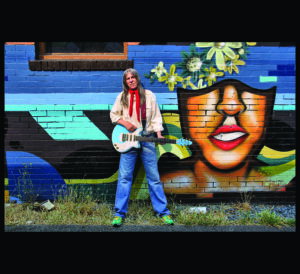
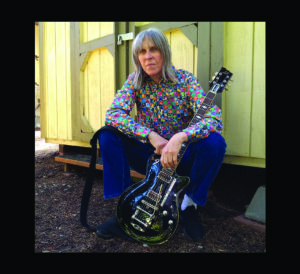
Rusty Reid is the kind of songwriter who treats music not merely as entertainment, but as philosophy in motion. Born in West Texas and shaped by years in Houston, Los Angeles, and the Pacific Northwest, Reid creates guitar-driven songs that blend folk, country, rock, and Americana into a deeply personal yet socially conscious sound. His work explores spirituality, politics, justice, identity, and human evolution with the soul of a classic storyteller and the restless curiosity of a lifelong seeker. Whether delivering intimate reflections or sharp cultural critiques, Rusty Reid writes with conviction, poetic clarity, and the enduring idealism of a true child of the 1960s.
Short Review Text
With albums like Head to Heart, Bayou Line, and The Unreasonables, Rusty Reid continues carving out a singular lane in independent music. His sound moves fluidly between alt-country, folk-rock, and classic American pop traditions, carried by melodic guitar work and thoughtful songwriting that refuses to shy away from big ideas. Reid’s music is reflective without becoming detached, political without losing heart, and nostalgic without feeling trapped in the past. There’s a timeless quality to his work — a sense that these songs are less about trends and more about questions that never go away.
Q&A
Your music blends folk, country, rock, and philosophical commentary so naturally. How would you personally define the “Rusty Reid sound?”
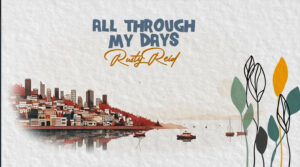
“Hi, and thanks for the interview. Well, I would say that my music is mainly guitar-based, usually features an original melody and some interesting chord changes, compelling themes and evocative lyrics, straightforward message (you don’t have to guess at what I’m trying to say). In my mind, I have a few somewhat different “sounds,” based mostly on the instrumentation. There’s the electric guitar Rusty, which is probably the majority of the new album, Lone Stardust, including the first single, “All Through My Days.” Then there’s the acoustic guitar Rusty; you’ll hear that sound on “The Change,” “Pancho and Lefty” and “You’ve Got a Lover,” primarily. Then there’s a more eclectic sound, guitars less featured or maybe absent altogether.
On the new album, “I Can See Clearly Now,” “Heart of Hearts,” “Alchemist” and “Oh, What a World” are along those lines. My voice, which is somewhat unique (I’m told; seems normal to me) is the connective tissue between these different instrumentation approaches.”
Head to Heart feels deeply introspective and socially aware at the same time. What inspired the emotional direction of that record?
“Yeah, that album is my “opus,” so to speak. I poured all my “wisdom” into it. I refer to it as “A Revolutionary Manifesto in Song.” It’s a “concept album” — or, really, double-album — that explains, song by song, my philosophy and worldview. The first half of the album addresses the good, the true, the beautiful (and even answers the age-old question of the Meaning of Life), then the second half delves into each of the maladies which continue to plague our human family and prevent us from brotherly love. The very last song brings us back to hope and goodness. The overriding emotion is love… for the ALL. Love is the highest state of life, and love for the ALL is the highest state of love: loving literally everything, all living things, the world, the Universe. The album addresses what we have to embrace, and what we have to give up, to create that state within and amongst ourselves, and thus to reach our true potential as a species. So, of course, it’s going to piss just about everyone off, because it’s pretty clear we don’t want that.”
You’ve spoken about maintaining the idealism of the 1960s. Do you think modern music still has the power to inspire cultural change?
“Ah, you’ve hit on a sore spot. If ever there was an experiment to test whether popular music can inspire cultural change, it was in the latter half of the 1960s, where almost every song was about love, peace, kindness, the goodness of people, the goodness of nature, fairness, sharing, equality, inclusion. There were strong messages against war, against bigotry, against sexism, against rote conformity, against rigged capitalism. I soaked it all in like a sponge, and never let it go. When I listen to those old songs, I’m delighted that I’m still onboard with their message. For awhile there, we thought we had turned a corner and made some nice advances in moral progress, and surely we did to some extent. But it turns out those of us were so idealistic and hopeful were actually a distinct minority. That generation turned out to be as rotten and crass and greedy and selfish as any other, perhaps more so. And when you think how in culture, it’s not just popular music and a bunch of hippies with guitars spreading this essential message, it’s in virtually every movie, every television program where the hero is defending truth and justice and goodness, while the villain always is taken down. Add in all the books dissecting these issues. And still, millions upon millions of people believe and behave (and vote) as if these ideas are too “woke” and they are going to gather into a mob and stamp them out. They can’t discern good from evil, hero from villain. It’s very depressing, really. What it all comes down to is selfishness. Today, we have major political parties that cheer on selfishness, and are determined to roll back any and all of that moral progress so as to benefit a tiny few. That’s what conservatism does.”
Your songwriting often feels cinematic and literary. Which writers, musicians, or thinkers have influenced you most?
“Ha. Apparently you didn’t listen to “The Unreasonables,” my purely carnal rock and roll album. But yeah, thanks, I’d like to believe that sometimes I achieve cinematic and literary. I do take on grand themes, so that lends impetus to striving for some profundity and musical passages that might support. I read insatiably, so there’s no particular writer who really stands out. For the past few decades I’ve tried to synthesize a worldview that makes sense of things, is scientifically grounded and yet has a high spiritual ceiling (I don’t think you can get any higher than love for the ALL, actually). The Beatles continue to be my guides in my musical journey. Few of their songs sound alike, all of their melodies were original, they played with all kinds of sounds, and increasingly they contemplated deeper thoughts. Recently I’m exploring the writings of two largely forgotten 19th Century American liberals: Moncure Conway and Robert Ingersoll. It’s interesting to note what has and hasn’t changed in over a hundred years. You can find my essays at Medium.com.”
In an era dominated by short-form content and streaming culture, how do you approach making albums that feel cohesive and meaningful?
“I don’t really pay much attention to current trends in the music business, I just do my own thing. Back in the hey day of vinyl, i loved double albums. It was like a huge bonus; you could get lost for a while in your favorite artist, rather than having just 30 minutes of music. i do believe that the internet and social media have lowered attention spans… so in music now we’re in the era of the single, preferably short single. I take the opposite approach. My plan is to put out the max a CD can hold, about 78 minutes, which in the case of Lone Stardust was 19 songs. I actually think pretty much any collection of songs can be “cohesive” for the listener if they like the artist.”
Where can we hear more of your music, and why should we?
“My five albums are streaming everywhere. Look me up on YouTube for my official videos. The homebase for everything is my website: RustyReid.com. If you just want love songs, I’ve got those. If you want fun songs, I’ve got those. If you want to check out philosophy or politics or spirituality with a beat to , I’ve got those too. As you mentioned, it’s a mishmash of pop, folk, country and rock. If you’re looking for “pure” something or another, I’m not your guy.”