Annie Anymore by One-Eared Boy (Interview 2026)
Edition Eighty-Eight- Week Eighty-Eight; Unit 2:
Written by: Mercedes Barreto
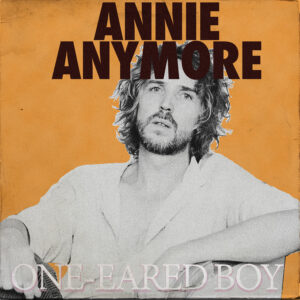
One-Eared Boy — Artist Introduction
There is something inherently cinematic about the music of One-Eared Boy. Rooted in indie rock, folk, blues, and alternative songwriting, the Paris-based project creates songs that feel both intimate and expansive—music that can inhabit a quiet room just as easily as it can open into something much larger.
One-Eared Boy’s recent work has been particularly focused on stories of memory, displacement, grief, abandonment, and the search for belonging. The 2026 release One-Eared Boy and the Orphan Train Riders draws inspiration from the history of the Orphan Train movement, transforming a largely forgotten chapter of American history into a deeply personal musical landscape. The project approaches historical subject matter not simply as documentation, but as a way of exploring the emotions and human experiences that can remain relevant across generations.
Musically, One-Eared Boy moves between fragile, understated passages and more forceful arrangements, allowing guitars, rhythm, melody, and vocals to create a sense of movement throughout the songs. The project has been described in connection with indie rock and folk, while blues and other influences also play an important role in its sound.
The latest single, “Annie Anymore,” continues that exploration while opening the door toward a new chapter. Released in July 2026, the song combines a more urgent musical energy with themes of memory and compassion, reflecting on how individual stories can gradually disappear from collective attention.
With a catalog that stretches back more than a decade and includes releases such as He Was a Friend of Mine, One-Eared Boy EP, Before Shadows Disappear, The March, the Burden, and the Desert, and One-Eared Boy and the Orphan Train Riders, One-Eared Boy has developed a body of work where storytelling and songwriting remain at the center.
Short Review — “Annie Anymore”
“Annie Anymore” is a striking continuation of the world One-Eared Boy has been building through its recent work. While the song shares thematic territory with One-Eared Boy and the Orphan Train Riders, it carries a stronger sense of immediacy and forward motion.
The song’s emotional foundation comes from its exploration of memory—particularly the way people can briefly become the focus of collective attention before gradually disappearing from it. That concept gives “Annie Anymore” a haunting quality without requiring the song to become overly dramatic.
Musically, the track leans into raw guitars and a driving rhythm, creating a more urgent contrast to some of the introspective material associated with the EP. The result is a song that feels both connected to One-Eared Boy’s established aesthetic and representative of a new creative direction.
There is a particular strength in the way the song uses a personal name—Annie—to give individuality to a much larger meditation on remembrance. Rather than allowing a story to become an abstraction, the song brings the listener back to the human being at its center.
“Annie Anymore” ultimately feels like a bridge: connected to the emotional world of One-Eared Boy’s recent work while suggesting that the next chapter may continue to expand both musically and thematically.

Q&A
For readers discovering One-Eared Boy for the first time, how would you introduce yourself and your music?
“I’m a French songwriter and musician based in Paris, making music under the name One-Eared Boy. The music lives somewhere between indie-rock, folk, blues and gospel. I’m drawn to old stories, forgotten people, grief and redemption, things that have been buried or left behind, and somehow keep coming back. I like the songs to feel little worn and shadowy, as if they’ve been sitting somewhere for a long time before being brought back into the light.
There’s often something almost sacred in the music too, although probably not in the traditional sense: choirs, old keyboards, voices gathering together, melodies that could almost belong to forgotten hymn. But there’s always something slightly broken or human underneath it. Ultimately, I think One-Eared Boy is about turning ghosts (personal or otherwise) into songs. Sometimes they’re dark, sometimes they’re strangely joyful, but I’m always looking for that little crack where the light gets in.”
Where did the name “One-Eared Boy” come from, and what does it mean to you today?
“The name came about quite simply and I’ve kept it ever since. I never really wanted it to be a literal description of myself though. Over time, One-Eared Boy has become more like a character, or maybe a way of looking at things: a boy who is somehow incomplete standing a little outside of things, listening to the world differently. Today, it feels like a world I’ve been building through the songs: a place for forgotten stories, ghosts, broken things, and hopefully a little redemption.”
What originally inspired you to begin writing and recording your own music?
“At first it was a need to create something that felt completely mine, to bring something out that might have been buried deep inside me, or something right there on the surface, without having to put any obstacles in its way. Something very cathartic, almost visceral.”
Do you remember the first song, album, or artist that made you realize you wanted to become a musician?
“I think it would have to be Queen’s Live at Wembley, even though it’s probably not the closest thing to my music!
As a kid, I was fascinated by that record and listened to it so obsessively that I still know it by heart (even Freddie Mercury’s little speeches between the songs). The idea of 4 guys lifting an entire stadium while somehow making it feel like they were playing for each person individually completely blew me away.”
Where can we hear more, and why should we?
“You can find One-Eared Boy wherever you normally listen to music, and there’s more on the way. I’d say start with the latest EP One-Eared Boy and the Orphan Train Riders, and see where it takes you. As for why you should listen… I don’t know if I’m the right person to answer that. But if you like songs that dig into old stories, ghosts and broken things, and still leave a little room for light, you might find something there.”