
Dr. Joanne Magro “The Power of the Stiletto.” News Column (06)
Edition Six- Week Six; News Column:
Written by: Dr. Joanne Magro
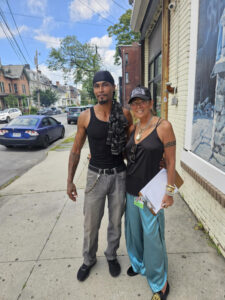
Dr. Joanne Magro: The OPIOID Epidemic (Part Three)
Dr. Joanne Magro and The Tales of Her Experience in The Field: Pounding the Pavement.
“Hopefully you’ve been able to read Series #1 and #2 as an introduction to “The Opioid Epidemic” in the United States. Series #3 will focus on what the REAL scoop is. We’ve gone over “the science” of addiction. We’ve followed what all the experts have to say and chime in on…but what’s the Real Deal”? When I speak about “the Real Deal” I simply mean what are the tales from the crypt from everyday people who are out on the streets and surviving in this world which is riddled with all the ebbs and flows of addiction just to make it through to the next day alive. The only way to enable these folks to have a voice was by allowing me to be their microphone and let them tell their stories in their own words…not mine. Hence, I decided to hit the streets and pound the pavement in Newburgh, New York, which is cited as one of the worst cities in the country, due to high crime rates and social challenges. It frequently appears on lists of dangerous cities in New York, experiencing issues like high rates of violent crimes, poverty, underfunded public services, and substance use disorders. At one point, 24/7 Wall Street also ranked Newburgh as the worst city to live in all of New York State. I want to make a quick comment on those that were interviewed. I have no disclosures.
All participants consented to the interview, and there was no monetary gain involved by all parties. All people involved during the interview process will be named as “Person 1”, Person 2, and so forth. All photos obtained were with the written consent of participants.”
Dr. Joanne Magro explains to us the details regarding this ongoing epidemic. This written piece is labeled as part three of the informative news series.
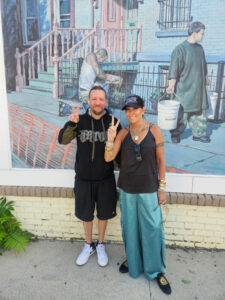
Person 1
Person 1 is a 43-year-old male who at 22 years old he began to start using cocaine recreationally with his friends. He already had started using marijuana and alcohol at an early age as well as his parents owned a bar just downstairs from the apartment that they lived in the state of Florida. He recalls that at about the age of 8 he frequently was tripping over his mother who, laid on the floor passed out just so he could get to school. Both parents were alcoholics, which led to a very chaotic live style for him at an early age and witnessing domestic violence. His father would often beat him with a belt if he did something wrong as well as sexual molestation. He goes on to state that at a very young age he did have thoughts of suicide and even had a plan mapped out. He was either going to hang himself with a belt or take a gun and point to his neck so that he would bleed out. He also states that he experienced depression, anxiety, and anger issues at a young age. He then recalls becoming very interested in attending church as he felt that church was a “safe place” for him. As he had gotten a bit older his father had been involved in an accident” and was being prescribed a combination of OxyContin and morphine. Both him and his father abused these drugs, and both began to use them recreationally together. His next step after the severe hurricanes had hit Florida in 2004 and 2005, he lost his residence, unable to find a job, was homeless, but somehow was able to continue receiving prescriptions for narcotics which he was selling on the street to make some extra cash. Eventually, he was arrested for possession of narcotics as well as selling narcotics. The only place for him to go was prison; however, according to him, all the prisons were filled. He made his appearance in” Drug Court”, represented by legal aid and was mandated by the judge to remove himself from the State of Florida and move to New York to do a 90-day outpatient treatment program for his substance abuse where he would receive rehabilitation. In addition, he was “married” to a woman for 17 years who had shared his passion of misusing opiates and was able to move with him.
When I met him, his wife was 4 -5 months pregnant and had not received any prenatal care and has continued to abuse drugs. The only reason that he was able to come to New York was because in Newburgh, New York there was an availability for housing to accommodate him and his wife. He is currently in a 90-day rehabilitation program but goes on to state that his living conditions are unbearable. He is in an old hotel converted to a sober home lifestyle but was able to draw a pretty accurate description of what his housing situation is like for him and his wife. In addition, his overall picture is hopeful, as he stated that he has a set of twins arriving shortly and needs to get sober so that he can provide for them and “man up”. In the current rehabilitation center that he is in, he is required to be in group sessions 4 times a week, each 3 hours long, submit a urine specimen, and see a counselor once a week. When asked if he felt that this program was helping him, he did state that he does like the group meetings, however, (DSS), the Department of Social Services is of no help at all regarding him and his wife’s living situation, his wife receiving appropriate prenatal care, as well as her sobriety not being addressed. He also states that the very drugs that he trying to stay away from are being sold and distributed right in the proximity of his hotel which makes staying sober very difficult for him. He has asked DSS numerous times to be moved to a different environment which is more compatible with his ongoing situation and has been denied also because of overcrowding and lack of availability.
Overall, his attitude is grim, and he feels hopeless as he is “just a number” moving through a very dysfunctional system.
Person 2
Person 2 is a 38-year-old male who states that he has been through the prison system since he was approximately 19-20 years old. He states that he graduated from high school but is unable to read or write which makes things difficult for him as he navigates his way through the system. He states that he has spent half of his life in prison. This person stole a car at 26 years old to help his family that didn’t have one and ended up serving a sentence of 7 years. He did eventually serve his full sentence and reenter society and got a job which he states that he had to leave as one of his superiors was asking for sexual favors in return. I met with him just the other day and this is his 1st month on parole. (DSS)- Department of Social Services has been assigned to his case. He is currently in the system for drug related issues; however, he states that he does not use any illicit substances and that this is just “part of the system”. His past is significant for his father leaving the household when this person was 14 years old and
remains incarcerated to date. This person also states that he had been sexually assaulted starting at age 8 and that family members were aware but did not do anything. This past winter he was homeless. He expressed how difficult it was as we did have an extremely cold winter. He also relates that DSS was acutely aware of his situation and was placed on a waiting list for housing. He has been seen by a psychiatrist and was diagnosed with Bi-Polar disorder and PTSD which he does take medication for. His current girlfriend is pregnant and on Methadone. He tries to see her once a week as the system has not placed them together, which he was visibly upset about. He also admits to being in a gang. He is trying to step away from “the gang mentality” but expresses the difficulty in doing such. In addition, he has been stabbed in the chest with a knife from an opposing gang member which he did have a hospitalization for and states that he’s “not afraid of the streets”. His biggest complaint currently is that the DSS is not doing their job and “doesn’t care about the people that are assigned to them. “Him and I spoke about why he is in a rehab and does not use
any substances and he politely answered, “they have nowhere else to put me.” I asked him where he sees himself in 5 years. He stated that he would like to have a home, a car, a child, a wife and own a tattoo parlor.
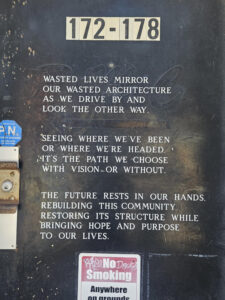
Person 3
Person 3 is a 40-year-old male who is currently on parole. He is originally from Tennessee and Ohio but has relocated to Newburgh for further treatment as there was no availability in either of those states, He states that he began using and sharing “pills” with his father at the age of 14 as his father had multiple prescriptions due to a previous injury. He was snorting and injecting at that time. He has been using Oxycontin, cocaine, crack, and alcohol since he was an early teen. He had left Tennessee for a “girl” and moved to Ohio where he continued his drug use and homelessness. He left behind an 18-year-old child of his in Tennessee which he has no contact with. He stated that while he was actively using illicit substances, he set a building on fire accidentally and was charged with Arsen and 36-80 years in prison. In 2019 his charges were dropped to aggravated assault and mandated to go to a Rehabilitation Center and parole. He states that he does have another child somewhere. He additionally states that for 2 years of his life he was “off the rails” with his addiction and abuse of substances. He also has been placed in Newburgh, New York since there was nowhere else that had any availability. He is currently in treatment; however, his urine toxicology screening came up positive for Roxy’s. His level of care has been upgraded. He also states that he is scared and frightened being in Newburgh as he is a “white boy from Tennessee” and feels that he is an easy target for theft and physical abuse. His appearance is disheveled, tattoos from head to toe, and overall, a nice guy.
Person 4
Person 4 is a 52-year-old black male who was arrested for possession of Crack and PCP as well as possession of an unlicensed firearm. He claims that he is not addicted to the above-named substances yet likes to get “high” with them at his own leisure and within the confines of his home. He is a Newburgh, New York resident and is currently living with his uncle otherwise he would be homeless. When prompted to as to why he uses these substances knowingly that they are illegal he stated that he likes “The Lifestyle”. He did receive his GED. He started smoking Marijuana at approximately the age of 13. He grew up in a home where his brother and father were both using injectable heroine. When asked about the scars on his face he relayed that he had been “jumped” on multiple occasions with a knife and those were his battle scars. He is currently in treatment and does not agree with the Judge’s decision as living in Newburgh is dangerous and that he needs a firearm to protect himself. He also feels that he should be able to use illicit substances in the privacy of his own dwelling. He has been through the system many times and is well known to drug courts.
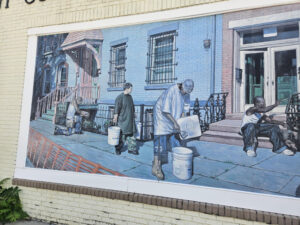
Person 5
Person 5 is a 63-year-old male who has struggled with drug and alcohol abuse for most of his life. He was enlisted in the Army in his younger years and served for 4 years with an honorable discharge. He has been convicted of DUI’s and DWI’s innumerable times. He also states that he does like to dabble with cocaine and crack. He at one time had a successful construction business and unfortunately succumbed back to his abuse of illicit substances and “lost it all”. At one point in his journey, he was sober for 10 years. He is currently homeless and was placed by DSS in one of the nearby sober homes. This person ‘s main focus was on the condition of the housing provided by the State of New York as being unlivable. He continues to fight with DSS for better living conditions.
He currently has lost his privilege to drive and will most likely never have his license returned to him even after he finishes with the rehabilitation aspect of his sentence from Drug Court.
Conclusion
So, after reading some quips about these five people and their tales of woe…what are some of the common denominators?
1- They were all introduced to substance abuse at an early age
2- At best their educational levels were low
3- Lower socioeconomic groups were more likely to engage in substance abuse
4- Family dynamics were chaotic and detrimental to their childhood
5- Mental health issues clearly were not addressed when they should have been
6- Broken homes with multiple stepmothers and stepfathers which equals instability
7- Lack of resources, especially in rural populations, was unavailable
8- Multisubstance abuse was rampant
9- Insecurities on a personal level and at a young age
10- And the coup d’e- tat…lack of nuclear families and boundaries within the family unit
This isn’t to say that if you have all of the above that you are doomed, it simply means that you are at a higher risk for substance abuse. So, here’s a bit of array of those that are “in the system”. The one main complaint by
all that were interviewed was the involvement of (DSS), Department of Social Services as these people’s needs were not being met, i.e. psychosocial, mental health and to put a large red “STOP: sign at the door as the door is simply just revolving for so many out there. It is abundantly clear that we need more manpower and more funding so that these folks have a better chance upon finishing these programs to lead a better life and
not to return repeatedly. Albeit no one’s story is glamorous, but by talking with them, they actually had some very good suggestions on sustainability in the outside world.
That’s why I chose to “Pound the Pavement”
“The Doctor Joanne Magro Foundation for Physician Health and Wellness”/ jmagromd@gmail.com and Peer Support Specialist for Addiction Recovery and Support Community Outreach/ jmagromd@gmail.com.
—————————
What topics would you like to read next by authorship of Dr. Joanne Magro in the upcoming edition of her column? Leave your comments below!
2 Comments
Ilia Matos-Giovannelli
You have made a difference in our lives at Horton Hospital in Middletown NY you were in charge of the ER you made a difference you saved lives.
And here you are making a difference saving lives especially the new generation. God has the perfect plan for you. And your helping others.
Not enough Thank You. You’re an amazing doctor , friend, sister.
Richard Binkowski
Well as your photographer I was privy to the actual interviews and I would say that you captured real life people struggling with addictions and other life situations that were pretty intense. What was also very interesting was their take on this faulty heath care system that doesn’t help them when they need it most. Well done!