
Howard Gorr- Music, Therapy, & Ghosts (News Column) 02
Edition Two- Week Two; News Column:
Written by: Howard Gorr
Paranormal Investigations with a Clinical Eye
The Clinical Perspective: Musician, Therapist, and Paranormal Expert Howard Gorr Weighs In
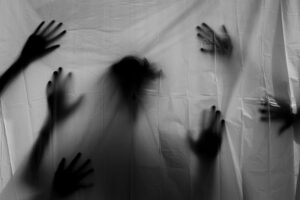
Howard Gorr wears many hats—musician, therapist, and self-proclaimed ghost expert—but they all seem to converge when he explores one of humanity’s most enduring mysteries: why people believe they see ghosts. Drawing from decades of experience straddling the line between the emotional, the psychological, and the supernatural, Gorr offers a rare perspective on the phenomenon of ghost sightings. In this article, he answers some prime interview questions all about how trauma, memory, and even sound itself can blur the line between perception and reality—and why, for some, the unexplained feels very real. This article presents the argumentative clinical side to the ongoing paranormal/clinical debate.
As a clinician, how do you approach claims of paranormal activity differently than a traditional ghost hunter might?
“Paranormal is often boxed in with mental illness. Sometimes there’s a case for mental illness, such as schizophrenia, however after some benchmarked cognitive testing a condition could discern if there is mental illness at play or if someone truly believes they experienced something.”
What kinds of psychological conditions or cognitive phenomena can mimic what people interpret as paranormal experiences?
“Yes, many people when there in certain situations they want to find something that’s paranormal and nature and they stay at tribute a realness to something that is just concrete. From house creaking to light showing up most are often explained by the environment.”
How do confirmation bias and group dynamics play a role during paranormal investigations?
“I think much can be explored scientifically however many experiences are very subjective in nature. And science doesn’t allow for subjectiveness or experiential experiences. Science is merely a paradigm of consensus. It is not the end-all of what can be deemed as reality. When you ask most scientists how they explain the love they have for another they are often lost in trying to explain emotions. And everyone on this planet would probably admit emotions exist such as love, hate etc. Emotions are not scientific however scientists believe and have emotions. So when it comes to the paranormal science falls short as a basis of validation.”
Have you ever encountered a case where paranormal activity was reported, but the true explanation turned out to be psychological or environmental?
“I’m not sure what ethical responsibilities clinicians would have regarding such experiences. I think the one thing clinicians cannot do is dismiss them as it’s part of the others reality whether true or false. The average clinician would scratch their head and look at mental illness as a factor. That’s the direction science would take. But an ethical clinician would hopefully be more worldly and diverse to further explore their clients experiences without judgment. The clinician doesn’t have to agree or disagree as therapists often do more damage by adding their own opinion and thus invalidating the clients experience.”

Do you think it’s possible to investigate paranormal claims scientifically without dismissing the emotional or cultural importance they hold for people?
“I think much can be explored scientifically however many experiences are very subjective in nature. And science doesn’t allow for subjectiveness or experiential experiences. Science is merely a paradigm of consensus. It is not the end-all of what can be deemed as reality. When you ask most scientists how they explain the emotion of love they have for another they are often lost in trying to explain emotions. And everyone on this planet would probably admit emotions exist such as love, hate etc. Emotions are not scientific however scientists believe and have emotions. So when it comes to the paranormal science falls short as a basis of validation. And it’s important to differentiate between the mind and the brain. When many scientists talk about the mind they refer to it as a bio electrical brain. When spiritually talking about the mind they are not referring to the brain.”
What ethical responsibilities do clinicians or investigators have when working with individuals who believe they are experiencing paranormal phenomena?
“I’m not sure what ethical responsibilities clinicians would have regarding such experiences. I think the one thing clinicians cannot do is dismiss them as it’s part of the others reality whether true or false. The average clinician would scratch their head and look at mental illness as a factor. That’s the direction science would take. But an ethical clinician would hopefully be more worldly and diverse to further explore their clients experiences without judgment. The clinician doesn’t have to agree or disagree as therapists often do more damage by adding their own opinion and thus in validating the clients experience.”
What topics would you like to read next by authorship of paranormal expert Howard Gorr in the upcoming edition of his column? Leave your comments below!