One Acre West- Americana Band Releases New Album Years in the Making (Interview 2026)
Edition Eighty-Six- Week Eighty-Six; Unit 2:
Written by: Mercedes Barreto
Introduction
One Acre West: Stories Written Along the Open Road
Some music feels as though it has been lived before it was ever recorded. One Acre West is creating exactly that kind of music — honest, roots-driven Americana shaped by memory, place, love, loss, and the winding roads of life.
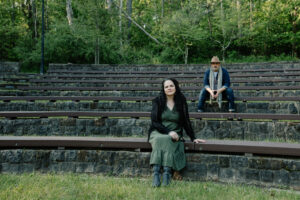
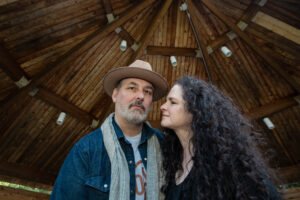
The project brings together singer Kristi Jean and songwriter and musician Steven Branstetter, whose musical journeys stretch from the foothills of Colorado and the wide-open plains of Texas to the Appalachian ridge-and-valley country they now call home. After years of performing cover songs, the pair reached a point where they wanted to move beyond interpreting other people’s stories and begin telling their own. That decision became the foundation for One Acre West. Their sound draws from traditional country, Americana, folk, Western roots, and heartland rock, while remaining firmly connected to the present. There is warmth in the harmonies, character in the instrumentation, and an unmistakable sense that every song has something personal behind it.
Their debut album, produced by acclaimed Austin producer Bradley Kopp, brings together ten story-driven songs exploring love, distance, family, memory, change, and the places that leave their mark on us. Tracks including “Boy Like That,” “Bayou Man,” and “Little Words” reveal different sides of the One Acre West story, from lively country energy to more reflective moments of regret and longing. At its heart, One Acre West is about connection — to people, to landscapes, to the past, and to the stories that make us who we are. It is music for listeners who still believe a good song can transport you somewhere, remind you of someone, or make you see a familiar part of life from a different perspective.
We are pleased to welcome One Acre West to the magazine for a conversation about their musical journey, songwriting, influences, partnership, and the stories behind the songs.
Short Review
One Acre West — Music Review
One Acre West has found a compelling space between classic country storytelling and contemporary Americana. Their music carries the warmth and familiarity of traditional roots music without becoming trapped in nostalgia.
There is a genuine sense of lived experience running through the project. Rather than reaching for manufactured drama, Kristi Jean and Steven Branstetter draw from the ordinary complexities of life — relationships, distance, memory, family, change, and the places we carry with us. The result is music that feels personal while remaining remarkably relatable. “Bayou Man” demonstrates their ability to turn country influences into something energetic and celebratory, with a lively honky-tonk spirit and a commanding vocal performance. “Little Words,” meanwhile, takes a more reflective path, exploring the things left unsaid and the emotional consequences of distance and regret. The production of Bradley Kopp gives the recordings an additional layer of authenticity, bringing together the musical traditions associated with Austin, Texas, with the perspective of musicians whose own lives have taken them across very different landscapes. What ultimately makes One Acre West stand out is the feeling that these songs aren’t simply being performed — they are being remembered, experienced, and shared. There is room in the music for both movement and stillness, for a dance floor and a quiet moment by the window.
One Acre West proves that Americana remains powerful when it puts the story first. Their music is rooted in where they’ve been, but it is clearly looking toward where the road leads next.
Q&A
For readers discovering One Acre West for the first time, how would you describe the story behind the project and what you wanted this band to represent?
“One Acre West really emerged when we realized there was still a lot of road ahead of us creatively. Music had always been there, but it often had to make room for careers, family, moving around the country and all the ordinary responsibilities that have a way of taking up more years than you expect. Somewhere in there we accumulated a lot more to write about than we had when we were younger. When we started One Acre West, we weren’t interested in trying to reinvent ourselves as something we’re not. We wanted to make the kind of Americana and roots music that felt natural to us, shaped by where we’ve been, what we’ve listened to, and what we’ve lived through. There are pieces of our hometowns in Colorado and Texas in it, but also all the places and years in between.
And we’re certainly not trying to pretend we’re 25. One of the nice things about doing this now is that we don’t have to. We know ourselves better, we’ve got better stories, and we’re probably a lot less concerned about whether we’re doing it the way we’re supposed to.”
You both spent years performing in cover bands before deciding to concentrate on your own original material. What finally made you feel that it was time to start telling your own stories?
“There wasn’t a dramatic moment when we looked at each other and decided, “That’s it, no more cover songs.” We still love playing great songs written by other people. But after years of doing that night after night, we started noticing the difference between a song you enjoy playing and a song that actually belongs to you- ones that tell your story.
We think musicians can certainly identify with someone else’s story, but it’s still someone else’s story story. By the time we’d spent so many years raising a family, paying the bills, moving all over the country, losing people important to us, making some good decisions and some spectacularly bad ones – there was plenty of material sitting there to write about.
And maybe age gives you permission to be a little less self-conscious about it. You’re less worried about whether a song is clever enough or cool enough and more interested in whether it’s true.”
The name One Acre West has a strong connection to both Colorado and Texas. What does the name mean to each of you personally, and how does it connect to the music you are making today?
“The “West” part is pretty literal for us. Steven grew up in Boulder, Colorado, right where the plains run into the foothills of the Rockies. Kristi grew up in Howe, Texas, where small towns, family, church and country music were simply part of the landscape. Those are very different versions of the West, but both ended up in the music. What’s interesting is that Colorado probably became more important to us after we left it. We’ve lived in Colorado, California, Texas, Massachusetts, West Virginia and now Pennsylvania. When you’ve moved that much, “home” stops meaning simply where your house happens to be. For us, West became shorthand for the place we came from and, for a long time, the place we thought we’d eventually get back to.
“One Acre” is the smaller idea inside that much bigger landscape. It’s a little piece of the world that’s yours. When we started writing original music, that’s really what we were trying to do -stake out a small piece of this enormous musical territory and make something there that belonged to us. Put those ideas together and One Acre West felt
like our name.”
Your music brings together Americana, country, folk, Western roots, and heartland influences. How would you describe the musical identity you’ve developed together?
“Americana and roots is probably the easiest answer because it gives us enough room to wiggle a little. A friend of ours said “Americana is country music for people who say they don’t like country music.” We think that fits us pretty well – there is a foundation of more traditional country, but it wanders from there. We both grew up with a pretty mixed musical vocabulary. There’s old country in there – Hank Williams, Buck Owens and the music that was on AM radio when Kristi was growing up – but also folk, rock, singer-songwriters, Western swing and plenty of things that don’t fit neatly into any of those categories. Kristi is currently very much into Billie Eilish.
We’ve always leaned into the idea that, as a musician, you should play the song not the instrument. Meaning, if you are playing guitar – play what the story the song is telling…a solo or lick that doesn’t serve the story doesn’t work. So, some stories are best told with a fiddle…or a Hammond organ, another song might need little more than an acoustic
guitar and Kristi’s voice. “Bayou Man” can lean into honky-tonk and Gulf Coast sounds, while something like “Little Words” has a completely different emotional and musical center.
Our producer, Bradley Kopp understood that immediately when we went to Austin, Texas to make the record. He never tried to impose a single “sound” on every song. The challenge was to let each one become what it needed to be while making sure that when you put them together, they still sounded unmistakably like One Acre West. That’s
probably the best definition of our musical identity we’ve found.”
Kristi, your journey has included church choirs, musical theater, opera, and bar bands. How have those very different experiences shaped you as a vocalist and performer?
“They all taught me different things, although I certainly wasn’t thinking about it that way at the time. Choir taught me to listen…to hear where my voice belongs with other voices instead of always trying to be the loudest one in the room. Theater and opera gave me technique, phrasing and dynamics, and taught me that sometimes pulling back communicates more than pushing harder.
Then bar bands teach you an entirely different skill: there’s a room full of people in front of you, some of whom couldn’t care less that you’re singing, and you’d better figure out how to reach them.
One Acre West is probably the first place where all those different parts of my musical life make sense together. I’m not consciously trying to sound “country” or “Americana.” I’m trying to figure out who is speaking in the song and what she would sound like. But I also grew up in a little Texas town listening to classic country on AM radio. That
music got into my ears pretty early. I suspect it lives in my voice whether I want it to or not. I tried to hide it when I was singing rock-and-roll, but the country always sneaks in there.”
Where can we hear more, and why should we?
“Our debut album comes out September 18, and oneacrewest.com is the easiest place to find everything – music, videos, the album, shows and links to wherever you prefer to listen.
As for why you should listen, that’s always a slightly dangerous question for a musician to answer. We’re obviously biased. What we can say is that we cared enormously about making this record. We went to Texas to work with Bradley Kopp as producer because we knew he understood how to emphasize the stories behind the songs. He’s worked with some of the most and a remarkable group of Austin musicians, including Alejandro Escovedo, Joe Ely, Jimmie Dale Gilmore, Eliza Gilkyson and many others – and we he’d give these songs the chance to become what we’d heard in our heads when we wrote them. Some are funny, some hurt a little, some are meant to be played loud, and a couple might make you think about somebody you haven’t thought about in a while.
We hope folks give us at least one song. If it does something to them, give us another one. That’s about the fairest sales pitch we can make.”
Anything to add here?
“Maybe just this: we’re very aware that we’re putting our a debut album at a point in life when we’re supposedly old enough to know better. There is a strange assumption around music that the important creative part of your life is supposed to happen when you’re young. Then adulthood arrives and you get sensible. You build careers, raise kids, pay mortgages, move for jobs and put certain things away. We did most of that. But we learned that the part where you’re supposed to stop making music or being creative turns out not to be true.
If anything, we’re better equipped to make this record now. We’ve got more scars, more people we miss, more things we can laugh at, and a much better understanding of what matters to us. Somehow all of that eventually led to a little studio outside Austin, Texas, making an album we couldn’t possibly have made when we were 25. So no, we’re not over the hill, but we can see the top from where we stand…and the view is pretty damn good.”