Sombra Del Sol by Spanish Castles (Interview 2026)
Edition Eighty-Three- Week Eighty-Three; Unit 2:
Written by: Mercedes Barreto
Introduction
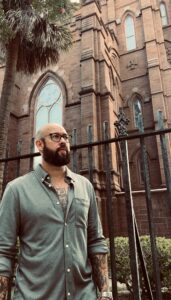
There is something inherently cinematic about music that seems to transport us somewhere beyond the present. Spanish Castles, the solo project of contemporary artist and musician Kirk Nilsen, does exactly that—creating an evocative musical world where medieval traditions, Mediterranean landscapes, flamenco guitar, folk, classical music, and darker contemporary influences converge. Based in Charleston, South Carolina, Nilsen draws inspiration from his Portuguese and Norwegian ancestry and a fascination with an “ancient world” that exists more in memory, imagination, and artistic expression than in modern life. The result is a sound that refuses to sit comfortably inside a single genre. Spanish Castles combines traditional Spanish and Portuguese music with Mediterranean folk, classical guitar, flamenco, rumba, gypsy, Arabic, baroque, gothic, Latin, Brazilian, folk-punk, and even subtle black-metal influences.
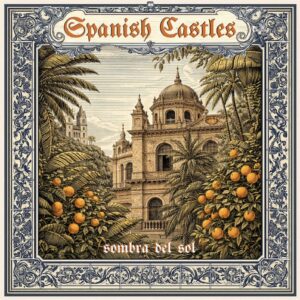
That remarkable mixture is part of what makes Spanish Castles so compelling. Rather than simply recreating historical music, Nilsen takes elements associated with different eras and cultures and reshapes them into something contemporary, atmospheric, and deeply personal. The project’s recent releases—including the 2026 album Spanish Castles and Sombra del Sol—continue this exploration. Tracks such as “Castillo del Sol,” “El Conquistador,” “Victorioso,” and “Caminata de la Muerte” suggest a musical universe filled with journeys, battles, landscapes, legends, and forgotten histories.
In this feature, we explore the imagination behind Spanish Castles, Kirk Nilsen’s relationship with guitar and flamenco, the influence of ancestry and history on his music, and the creative philosophy behind an artist determined to bring an ancient aesthetic into the modern world.
Short Review
Spanish Castles is the kind of musical project that rewards listeners who enjoy stepping outside conventional genre boundaries. Kirk Nilsen’s work feels less like a collection of songs and more like an invitation into another time and place.
The project’s fusion of classical and flamenco guitar with Spanish and Portuguese folk traditions, Mediterranean influences, Arabic textures, baroque elements, gothic atmosphere, folk punk, and darker sounds creates an unusually rich sonic palette. The 2026 Spanish Castles album demonstrates that expansive approach particularly well. With titles including “The Arrival,” “Swords. Drawn.,” “War by Horseback,” “The Long Ride,” “El Conquistador,” and “The Final King,” the music carries an almost narrative quality, encouraging the listener to imagine characters, landscapes, conflicts, and journeys behind the compositions.
What ultimately makes Spanish Castles stand out is its commitment to atmosphere and authenticity. Rather than treating historical and cultural influences as decoration, Nilsen appears to use them as building blocks for a distinctive artistic identity—one rooted in guitar, heritage, imagination, and a longing for worlds that have disappeared.
Q&A
For readers discovering Spanish Castles for the first time, how would you describe the project and the musical world you’ve created?
“Spanish Castles is a contemporary take on traditional Mediterranean and medieval folk music from the Iberian peninsula – drawing influence from Spanish flamenco, Portuguese guitar, classical guitar, Italian and Greek folk music, medieval baroque lute, Arabic oud, and various other musical arrangements from Brazilian jazz to Nordic black metal and classical nylon string guitar.
The world I have created is one that no longer exists, a world of bespoke craftsmanship, pride and care in your works; a world which once towered in artistic beauty and architectural masterpieces, when the world was still full of mystery and adventure. I take the listener into a world of medieval grandeur and intrigue, to a time when knights still roamed the streets and even into a slightly more modern age where Spanish and Portuguese pirates scavenged the seas in search of treasure and new lands.
My entire first album was written as a novel of sorts, detailing the adventures of a king who must ride into battle to retake his kingdom, only to fail a second time and be eliminated by his own men. Subsequent albums are the songs written by the descendants of the lost empire, trying to restore the ancient arts and culture of their people.
Spanish Castles is described as a fusion of medieval, Spanish, Portuguese, Mediterranean, flamenco, classical, Arabic, baroque, gothic, folk-punk, Latin, and Brazilian influences. What initially inspired you to bring so many different traditions together?
The original inspiration came from an internal struggle of revolt against what I feel is a dystopian modern movement of the arts that lacks character, soul, and quite frankly, talent and originality. Music no longer speaks from the music alone, it instead commands your emotion with manufactured lyrics, and tells you verbatim what the song is about, how to feel about the music, which emotions to have, followed along with monotonous, corporate sounds. In my quest for something raw, more human, and in touch with the soul, I stumbled upon various forms of folk music. This was also greatly inspired by my research into different traditional arts as reference points for my paintings and tattoos, and my world travels. After diving deeper and deeper into my research and becoming inspired by so many great cultures of the past; I decided to write music encompassing much of these styles into a new contemporary form that will help raise awareness to traditional music that is dying out, and hopefully bring a new interest in people researching the roots of my music to shine light on various dying arts. I refuse to stand idly by and watch the entire world turn into one singular, worldwide corporate monoculture where everything is the same, and it is all nothing.”
Your Portuguese ancestry and Norwegian heritage both play a role in your personal story. How have your roots influenced your creative identity and your music?
“In modern times it is common, expected, and hip to dislike yourself, your culture, your history, and your traditions. It is quite a strange act to rebel against yourself, and never made much sense to me. There is a common trend in western societies to latch onto the cultures of other societies and emulate their ideals; and this seems akin to the mimicry found in some predatory animals. It is an odd concept. For me, I always found the history of my family and their original countries fascinating. Everyone, no matter who you are, where you come from, where you were born – has a unique culture and tradition that should be preserved. In modern times, much of these ancient traditions have been crushed with contemporary culture and governance, in the idea of creating a singular world; yet this is destroying all diversity. I love so much of other cultures, and would feel quite strange though, for example, if I decided to make Irish music, or traditional Chinese music, as there have no bearing on my ancestry. So looking into where my family came from, how they got here, and why the left to move to America was not only interesting, but led me to looking into the culture. What did my family used to believe? What food, traditions and music did they partake in? What was lost along the way? In an effort to bring back the lost traditions of the past, began a long journey into a world of musical intrigue. Portuguese guitar was very fascinating and I loved the music. And researching where it stems from which includes a multitude of Mediterranean music mixed together from Andalusian folk traditions, medieval lute, Arabic oud, etc. was a major inspiration. The same with the Norwegian folk traditions bringing their own flair to the aesthetic arrangements. I saw everyone should look into where they come from and the ancient music of their past and they will be greatly surprised and hopefully enthralled at how much more alive this music is compared to its contemporary counterparts.”
You’ve described a longing for an ancient world “from places and times which no longer exist.” What does that idea mean to you personally?
“When we hear about the ancient world, modern revisionist and zealous historians enjoy only pointing out the trouble and strife of the past, to suppose that all of the old world was horrid and miserable. Most of these people have a personal disdain and vendetta against particular cultures they do not want to permeate the modern ethos of the new world. The problem is, although, just as in modern society, there were bad times – this is outweighed by the beauty and dedication people had to their communities. A world where homes and roads were built to last, and designed to beautify your community, when traditions in the arts, music and architecture were respected and continued, and people took care, pride, and time in all of their daily efforts. The modern world gives its own self appointed title of societal peak, where although we have more technology thanks to the inventions of a very, very small group of highly intelligent individuals, society as a whole seems to be greatly regressing. From horrid architecture, to soulless monotonous music, to novels written with AI, a lowering IQ and literacy, the world is losing what it means to be human, the one thing that separates us from mere animals – the ability to create. The world is now run simply by greed and productivity. It mattes not what is good for the earth, good for the people, good for the eyes and the soul; all we care for is how fast, how cheap, and how much can be generated, and it is making the world quite a depressive an regressive state.”
Where can we hear more, and why should we?
“You can hear all of my music for free on spotify and all streaming and digital download sites, and my website will be updated with links to all interviews soon, if you are really into original new music and interesting stories!”
Anything to add here?
“Only thing to add is that I am recording some new albums, pressing a vinyl in the coming months, and merchandise will soon be available on my artist website (www.kirknilsen.com) but for now, check www.spanish-castles.com and look for my music on Spotify, Pandora, Youtube music, iTunes, etc. Forgot, I recently made a TikTok and Instagram (www.instagram.com/spanish.castles) and youtube. Thanks!!”